

 Sjøforsvaret: 6 Kustjager: Sleipner, Æger, Gyller, Odin, Tor, Balder 1936-59
The modest Norwegian Navy had a few modern assets in construction or in service in 1940 when Germany launched their invasion, Operation Weserübung. The largest were the Aalesund class destroyer, started in 1940, launched in 1941 under German control but never completed, and the Sleipner class torpedo boat (designated as Coastal Destroyer) with a first batch of three launched 1936-38 and operational in 1940, plus three more in construction (Odin sub-class), launched in 1939 and completed for the Kriegsmarine. Here is their story.

Development
Quick Overview of the Surface Fleet in 1940
In January 1940 the Sjøforsvaret’s surface fleet was modest, but still tailored to defend its own coastal waters, helped by its geography of narrow fjords, all helping to create a defence in depth. Thus, minelayers and minesweepers were all-important, but they were largely passive, whereas there was a part of the navy used in active defence: The flagships were four venerable coastal battleships: The two 1900 Norge class and the two 1897 Haarfarge class. There were three 540t pre-WWI Draug class “destroyers” and scored of torpedo boats dating back 1898 to 1920 of the Varg, Storm, Ravn, Teist and Snogg classes. They were all quite small on only really fit for Fjord inner defence. There were also the U-Boat style A1 class submersibles (1913, see UA) and the six more recent Electric Boat design B class (1922-29).
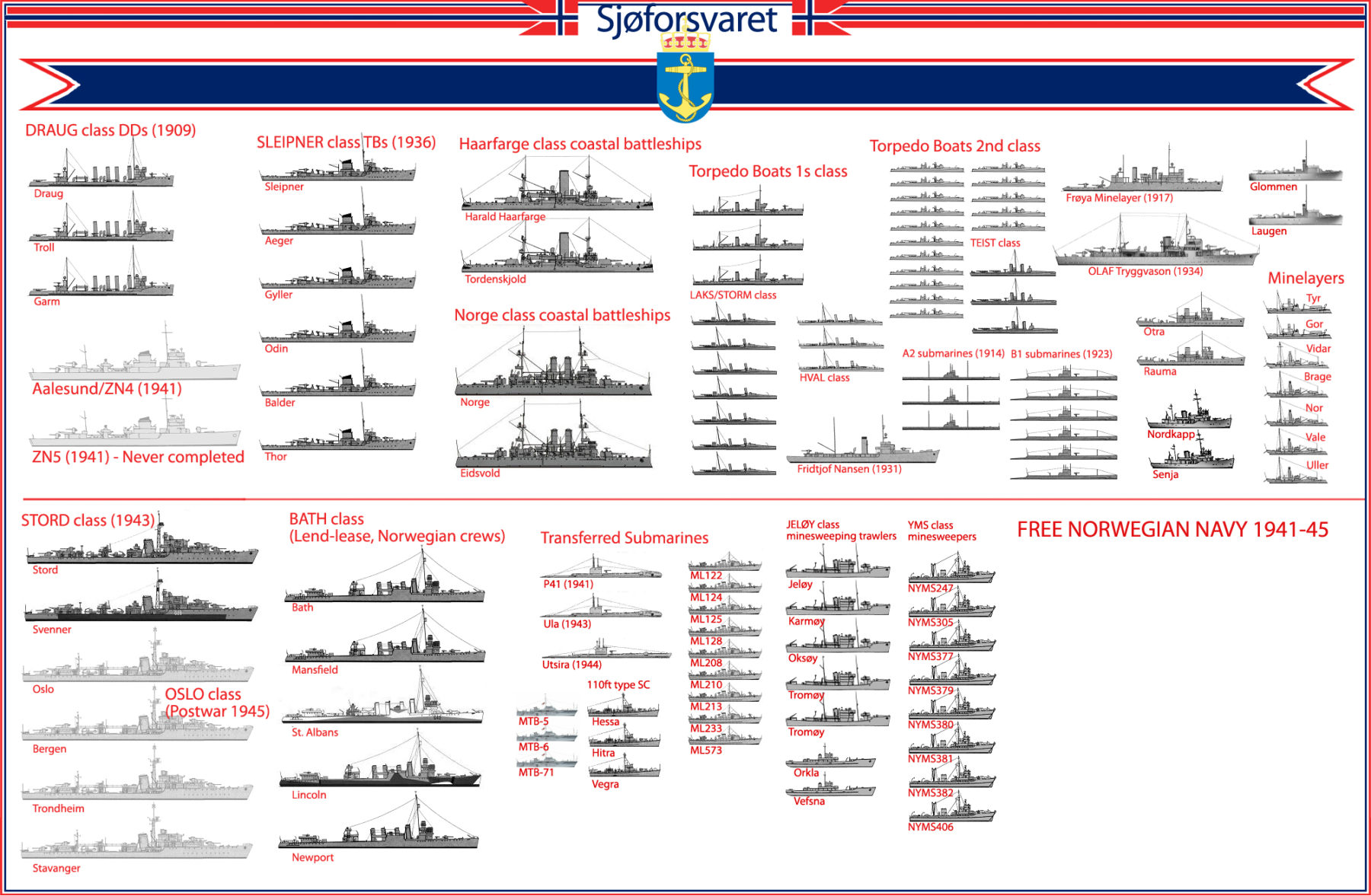
 Photo: HnoMs Trygg of the 1919 Snögg class, the latest surface combatants of the Norwegian Navy in 1933. But all these were old assets, so the Navy staff wanted more recent ships, which were, especially after the 1929 financial crisis which strike Norway hard as exporter of raw material and steel, or its large merchant Navy, as exchanges plummeted. However, in 1938 when Austria was forced-attached to the 3rd Reich and new tensions rising across Europe, at last was voted at the Storting (Norwegian parliament) a project of two modern destroyers, the first since 1908: The Aalesund class, the object of a future post).
Replacing older TBs
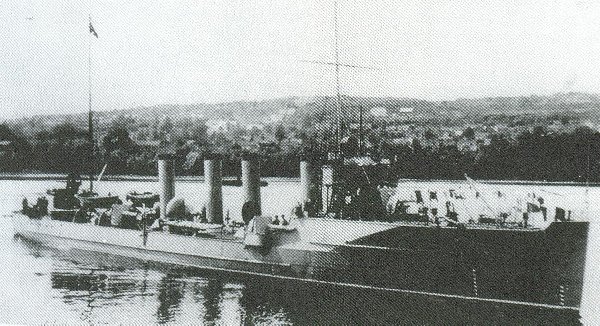 However in 1933, as Hitler came to power, a situation observed with some concerns from Oslo like in Stockholm were discussed already the prospect of replacing at least the oldest torpedo boats still in service of the Varg class (1894, 45t). They were long overdue for replacement and Norwegian engineers had to do miracles to maintain them in operational conditions. But they were of a standard that no longer existed and were too slow, too weakly armed to do anything but a last-ditch harbour defence. The next Hvas class (1898, 64t) were barely more impressive, as the Hval/Storm class (1896-1900, 84t). The naval staff believed all could be replaced by fewer, but much more modern vessels capable of off-shore defence if needed and rapid transit between fjords.
The naval staff wanted to maximize the usefulness of these new ships, and in addition to modern artillery and torpedoes, they would be used for ASW escort and minelaying operations. This was an important contract and three were agreed upon back in 1934 when voted by the Storting, to be built FY1924, 35 and 36 at Horten Naval yard. The issue was that Norway completely lacked the experience to build such modern ships. Its latest home-built destroyers dated back 1908, and its latest torpedo boats, from 1919-1921 so more than 15 years old. Plus the Snögg class, despite being a relatively large, 198/256 tons design were only capable of 25 knots, had two 3-in (76 mm) guns and four 45 cm torpedo tubes when the naval staff wanted a ship capable of 30+ knots armed with 100 mm guns and 533 mm (21 inches) torpedo tubes to match the existing competition.
Their greatest competitors by then, and inspirations as well, were the German Kriegsmarine’s own Type 1923 and 1924 destroyers. The “birds/cats of prey” were indeed a design that most navies looked at, they were modest in size, yet a balanced and aesthetic, racy design for their time. The aim was to build modern ships that were still small and thus as inexpensive as possible, while retaining the most powerful armament practicable became a guiding point for the new design.
The new Sleipner class would be classified as “coastal destroyer” or “kustjager” but for their size and characteristics they more likely matched torpedo boats built elsewhere in the world at the time, and so they are generally described as such in naval literature and by most authors. Despite the hiatus in ship design, the Norwegians trusted Horten naval yard ‘s own design bureau to come up with their own independent design. And amazingly, they succeeded in independently creating an innovative vessel, even though having limited combat capabilities by their size, capped by the parliament. Norwegian engineers had more voice to defend their view apparently and these ships did not turned out to be the equivalent of the Otori class, overarmed and under-stable. A balance was found with the design right away. Once approved and voted for in 1933 the first of these was laid down the same year, but laid down on 3 October 1934. two more were oted fore and started in 1935 and 1937 (likely ordered 1934 and 1935). They were launched in 1936-38, completed in 1937-39. This was four years per ship, which seems long for their small tonnage,but acceptable given the amount of new technologies that were incorporated in this brand new and modern design without previous experience.
Based on this success, not only a second class, slightly improved “Kustjager” was ordered in 1938, but a subsequent class of proper Norwegian destroyers was also ordered, the Aalesund class, which represented a larger design—with a standard displacement of 1,220 tonnes and an armament of four 120 mm guns—though it was still a development of the Sleipner class. Construction however, started in 1939, and was not completed due to the outbreak of war. The start of WW2 took most navies by surprise half-way in modernization and expansion efforts.
Design of the class

Creating a brand new design after a hiatus of 15 years in experience at Horten was nothing short but remarkable and the final result was really different than anything that came prior in Norway. It’s hard to pinpoint an obvious inspiration, they looked without questions at other countries own TBd or small ships, both the Type 23/24 as seen above, reminded in some aspects, but also at for example the Italian Spica class also from 1933.
An important point is that norway was not a signatory of the Washingtopn treaty, nor the later London Treaty and thus, was not concerned by 600 tonnes limit for small surface combatants that was happily exploited by Italy, Germany, France and Japan for a last breed or torpedo boats.
The Storting still took apparently this 600t limit as a symbolic cap for their standard displacement, and yet Norwegian engineers had to take in account stringents requirements for armament and speed. The solutions retained were innovative:
To reduce the weight of the hull and propulsion system, Horten’s designers employed a modern longitudinal framing arrangement and a high-pressure steam boiler plant, omitting a double bottom. Despite their reduced dimensions, the hulls retained a subdivision, into numerous transverse watertight compartments. In addition the superstructures were made in welded aluminium for the first time in Norway. This enabled to save topweight and keep a good armament for their tonnage without much risks for stability. Although primarily intended for the defense of the Norwegian coast, they had a considerable operational range.
Hull and general design
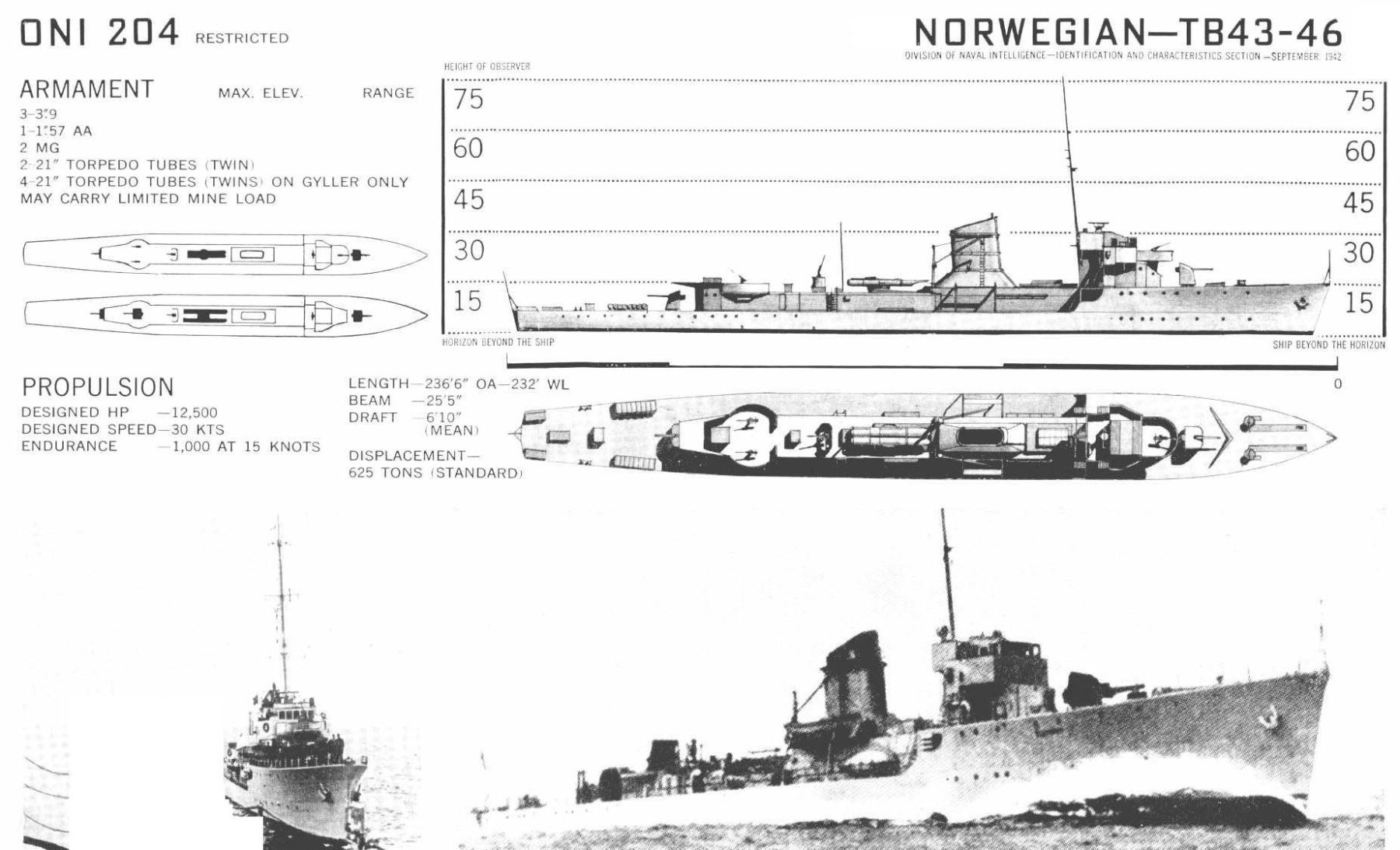
ONI, the US Navy Office of Naval Intel delivered to all ships in service with the USN in 1941-42 a booklet of all warships in service in any nway across the globe plus some coivilian vessels ans suspected commerce raiders, both friends and foes. Unfortunately for Norway after its fall and occupation in May 1940, the Sleipner class was now under Kriegsmarine’s service and potentially able to launch attacks from northern fjords against Arctic convoys to Russia under allied escort. So here is TB46-46 on the Sleipner class, ONI 204 booklet section.
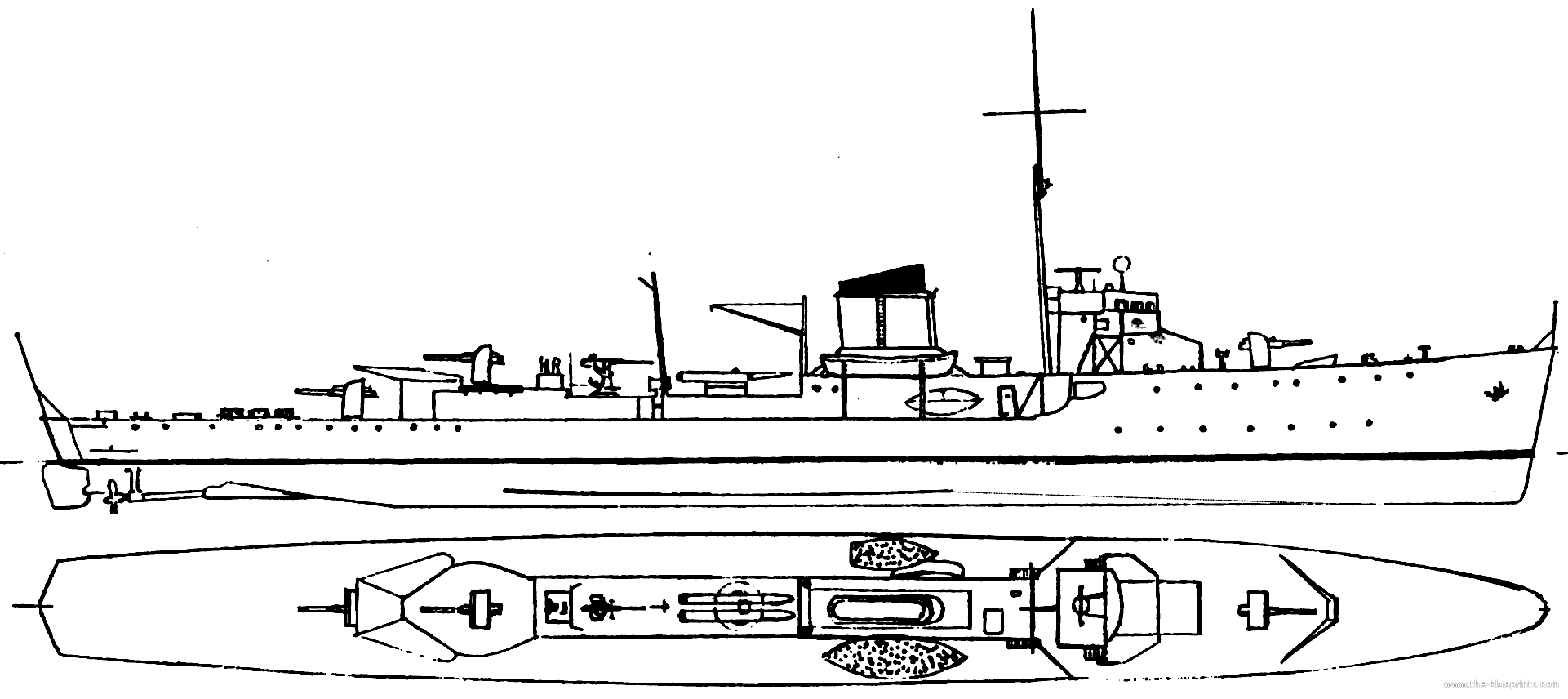
The Sleipner class were small vessels, at 74.30 meters (243.77 ft) in overall lenght and 72 meters between parallels, for a beam of 7.80 m (25.59 ft) and a draught of 4.15 m (13.62 ft). They had a 1/10 ratio good for speed, and the hull had fine lines also helping in this. The proportions were elegant, with a forecastle roughly 1/3 of their overal lenght, with a slanted, but straight clipper bow, a lot of flare, a constant beam with full hull lines to maximize buoyancy and stability and internal space, a long and relatively narrow deck structure, and relatively bare upper deck. The bridge was enclosed, 3-faceted with square windows, with a step in front for the map room and a small telemeter post on top. It was decided to omit entirely the search light to spare top weight.
There was a single raked main mast, no spotting top, a large slanted and capped funnel further aft, with a large base where the three boilers exhausts were truncated in. Behind it was the twin torpedo tubes and further aft, the AA artillery and “X” and “Y” main guns, with “X” placed in a superfiring position and Y on deck. This, instead of a superfiring position forward, preserved both a three gun solution and stability and the placement of “X” aft rather of having a “Q” amidship position made for a better arc of fire. All three guns had light shields, only protecting against the weather and possibly light shrapnel and small arms fire.
However the supestrcture was made in aluminium and completely unprotected, and they lacked underwater protection, having no double bottom and only bulkheads separating all three boilers and the turbines aft, together in the same room. There was no space for any echeloned arrangement. The poop was of the transom stern type, also inspired by the Germans, and a first for a Norwegian design. It seems its peculiar design was tailored for dropping both mines and depth charges.
By the way, there was ample room to install rails for mines running from the poop to the forecastle cut. For their crew of 75, they had four boats: One large whaler barge under davits on starboard, one admiralty powered cutter on port, and two yawls placed sideways on the structure walls nearby, all abaft the funnel. The upper structure deck supporting “X” gun was higher up than the structure supporting the torpedo tubes behind the funnel and was a crane for reload. A small mast was located behind, and the main Bofors gun was placed at the same level behind. There was just behind the second helsman’s post with a wheel and repeater in case the bridge was hit. The hull had counter keels and a flattened bottom for extra stability and roll reducing features.
They had a slight sheer and a stem with a shallow rake, a sleek profile with limited structures on top. The small superstructure containing the navigation and combat bridges took some inspiration perhaps of German F-type escorts. The broken transom was shaped like a wide “V” when viewed from above. The hull was divided into 12 transverse watertight compartments. The ships bore their names in small lettering on the hull sides beneath the forward gun and on the stern transom. Overall, despite having little experience prior to this, Horten’s engineers made a brillant design for the budget and constrains they had.
Powerplant
This consisted in three Parsons boilers, oil-fired, with injection for faster burning rates, working tat 32 atmospheres, and one after the other from the bridge to almost the TTs. Just behind were located the two De Laval geared steam turbines, modern sets with HP and LP stages for cruising. They were mated to two shafts supported by struts, with three-bladed 1,650 mm fixed-pitch bronze propellers. The single rudder was axial, and placed at the extreme aft, just short of poop’s top. This powerplant was rated for 12,500 shp (9,300 kW) and top speed on trials was 32 knots (59.26 km/h), but service speed lowered to 30 knots. Range was estimated to 3,500 nautical miles at 15 knots based on 100 tonnes oil, but sources are scarce over these figure. Other gave 1,500 nautical miles for the same speed.
Armament
For a torpedo boat, the armament was measured, not overly heavy, and balanced, versatile. it was changed in German servie and revised for the next Odin class (X mount removed and replaced by AA).
In April 1940 to avoid capture, Sleipner managed to join the RN and its two 100mm/40 were replaced by 4-in (102mm)/45 QF Mk V main guns, and the Bofors dropped and replaced by two 20mm/70 Oerlikon Mk II AA guns.
10 cm/40 Bofors M36 guns
 These Bofors guns weer designed to equip this new generation of torpedo boats and minelayers (Fröya class), both in Norway. They also equipped the Odin class. Thus after capture, they were also used by the Germans. By January 1941 however hthe Germans had them removed and replaced by a their own Krupp 10.5 cm/45 (4.1″) Tbts L/45 for amm compatibility. it’s likely the 10 cm guns were added to the “nordatlantikwall” in coastal defense batteries. Some sources decribed them as 101.6 mm/40 (4.0″) QF Bofors, the Germans 10 cm (3.9″) SK/L 40(N).
These guns entered service with the lead ship in 1936.
About the shields, some references described them as shallow splinter shields, but others shows in photos either narrow, angular shields, whereas subsequent ships featured different, wider shields with rounded upper edges.
Specs
Lenght 157.5 in (4 m), mas unknown. Barrel 40 caliber.
Shell: Unitary, HE L/4,6 (N): 43.0 lbs. (19.5 kg) and illumination.
Muzzle Velocity 2,540 fps (775 mps), 12-15 rounds per minute
+30 degrees elevation, range unknown, c8,000 m max, 5,000 m for accuracy.
1
Bofors 40/56 Bofors M36
Single mount located aft of the torpedo tubes. 1st generation of the legendary bofors. No need to dig into it, it was covered here.
It seems HNoMs Gyller was completed without its Bofors AA gun.
AA Machine Guns
 The ships are described as completed with two 12.7mm/90, “Colt” heavy machine guns. We could assume they were the navy, liquid-cooled barrel US-pattern model and not the Browning M2 air-cooled heavy machine guns based on photos. Location is uncertain, possibly in the wings forward or more likely on deck. Most sources described them as “Colt MG52” 12.7 mm heavy machine guns (Jarosz 2019 p. 60).
Torpedo Tubes
For better A/S punch the Sleipner were a “one-trick pony” design with just two 533 mm or 21 inches torpedo tubes. The Norwegians did not manufactured torpedoes at the time, so they likely were british Mark VII models from Whitehead. The crane obviously was used for reloading, but no spare torpedoes are shown. The crane was likely rather used to hoist and lay the two paravanes stored nearby on the walls. Thus, these ships has a way to deal with mines. In some sources only Gyller had two twin torpedo launchers bit photos showing this are hard to come by.
Depth Charges
The Sleipner class are described having two or four depth charge launchers and two depht charge racks at the poop. The models are also likely British standards DCs.
Mines
That capability was present from the start, with rails potentially installed from the poop to the forecastle cut. However some sources states they had only 24 mines, so likely limited to the poop deck, 12 per side, likely to not degrade stability. No photos showed them ever mounted so this remained an option for all their service.
⚙ Sleipner class specifications |
|
| Displacement | 597 tons stabndard, 708t-735t max FL |
| Dimensions | 74.3 x 7.8 x 4.15 m (243.77 x 25.59 x 13.62 ft) |
| Propulsion | 2 shafts De Laval oil fuelled steam turbines, 3 Yr boilers, 12,500 hp |
| Speed | 32 knots (59.26 km/h) |
| Range | 100t oil, 3500 nm/15 kts |
| Armament | 3× 10 cm, 1× 40 mm Bofors, 2× 12.7 mm Colt AA, 1×2 53.3 cm TTs, 4× DCT, mines |
| Sensors | Hydrophones |
| Crew | 75 |
The Odin sub-class
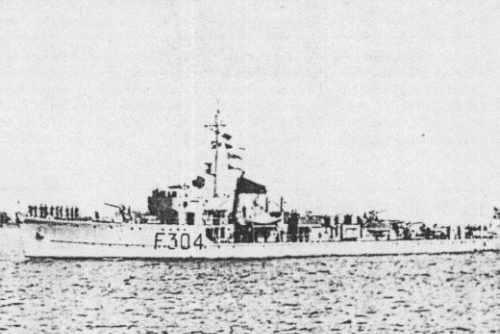 The keel for the prototype ship Sleipner (the eight-legged horse ridden by Odin) was laid at the Horten in 1933 or October 1934, according to other sources, the keel for the, Æger (after the sea god Aegir or Gymir) laid the following year. Both were launched in 1936, same year construction of Gyller (“glider” or golden”, one of the twelve horses used by the Aesir in Norse mythology) started. Sleipner was the first to enter service, in 1937, with the next two following over the next two years. After these initial three ships, tested and showing their excellent design in trials, construction of a new serie of coastal destroyer was ordered on a modified design, the Odin sub-class, in 1938.
Their hulls were slightly lengthened as the beam, but the draught was reduced, for a slight increase in displacement. As the attempt to mount heavy armament would proved detrimental to their seaworthiness and stability, it was decided to reduce ther armament from three to two main guns. Only Thor was constructed at the Fredrikstad Mechanical Shipyard and not in Horten due to bottlenecks and for the latter to take experience in modern designs. About their fate, see below.
⚙ Odin class specifications |
|
| Displacement | 623 tons standard |
| Dimensions | 74.6 x 7.9 x 3 m (243.9 x 25.7 x 9.10 ft) |
German Conversion
Atter capture, the Kriegsmarine had only four ships left, of both sub-classes collectively named the “Leopard class”, aas they were all renamed, and retook the “Raubtier” names of the former Type 1923 torpedo boats. Æger was no longer there, sunk 9.4.1940 in Stavanger by the Luftwaffe while prepared to depart for Britain. Gyller was in refit and surrendered to German troops on 11 April 1940 at Kristiansand and was recommissioned by Kriegsmarine under name Löwe. She was rearmed with one, then a single 105mm/45 SK C/32 main gun in 1941-42, one 37mm/83 SK FLAK C/30 replacing the Bofors and two 20mm/65 FLAK C/38. As for the completed Odin class, Tor and Balder were rearmed the same as Tiger and Leopard. Nothing is certain about Odin/Panther. They were re-classed as Torpedoboot Ausland (TA) but instead of numbers, were renamed Gyller to Löwe, Odin to Panther, Balder to Leopard, and Tor to Tiger. So some sources calls them the Leopard class, like german-navy.de.
Career of the Sleipner class
At the outbreak of World War II, only the first three, Sleipner, Æger, and Gyller were in service, later joined by Odin, the onbly one of the sub-class to be completed by April 1940. They patrolled Norwegian territorial waters, escorting merchant vessels from belligerent nations trading with Norway, safeguarding neutrality. On October 2, 1939, Odin escorted the Polish Robur IV, Kromań, Wilno, Chorzów, and Narocz through Norwegian waters, with overhead Luftwaffe aircraft shadowing them, and made their way from Gothenburg to Great Britain. The remaining two of the Odin class were launched in September and October 1939 but were still fitting out in April 1940 in the shipyard, unarmed and unequipped. Sleipner and Æger formed the 2nd Destroyer Division, Gyller and Odin formed the 3rd Division but on April 8, 1940, a day before the invasion, Odin and Gyller rescued survivors from the German troop transport Rio de Janeiro sunk by the Polish submarine ORP Orzeł…
After the invasion they fought to defend Norwegian waters, with few successes, like on April 9, Gyller sank the German merchant ship Seattle (7,369 GRT) at Kristiansand. Sleipner mostly shoot down Luftwaffe aircraft and managed to reach Britain on the 27th, the first of the future Free Norwegian Navy equipped largely by Britain in WW2. Æger was senk the day of the invasion in Stavanger after sinking the troopship Roda (6,780 GRT). Stukas fell on her. She was beached not to sink, later captured but never repaired by the Germans. Odin was captured by the Germans, Balder captured at Horten, Tor scuttled by the Norwegians at Fredrikstad.
Sleipner
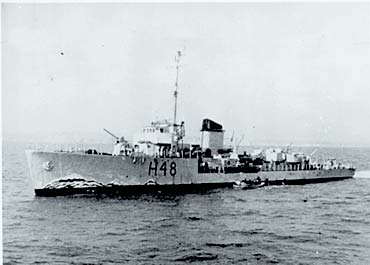
Sleipner was ordered under hull number 120 at Horten Royal Dockyard & arsenal, ordered in 1933 and likely laid down on 3 October 1934, launched for certain on 7 May 1936 and completed somewhere in 1936. Photo: Sleipner as a frigate postwar, not the fake bow wave (conways). Sleipner was in the 2nd Naval District’s 2nd destroyer division. She was present when the US steamer “City of Flint” captured German prize crew entered Tromsø on 30 October 1939, seeking shelter from the RN. The Norwegians escorted her away from after the German prize crew were refused entry. Instead she entered Haugesund on 3 November, seized by the Norwegian minelayer Olav Tryggvason, the crew interned and the American crew freed. Warned in the night of 8-9 April 1940 of the German attack on Norway, the destroyer’s skipper Kommandørkaptein Ernst Ullring was tasked to patrol over Vestlandet and Trøndelag and was in Hustadvika Bay with the PB Syrian, looking at the British destroyers Hero and Hyperion laying a mock minefield in Operation Wilfred. She was suddenly ordered to reinforced Trygg and Sild at the mouth of the Romsdalsfjord.
On 11 April Ullring was ordered by Rear Admiral Carsten Tank-Nielsen to take command of the “Romsdalsfjord Naval District”, created by Lieutenant Münster of Trygg. Ullring thus became the flagship and folotilla leader for Trygg, Sild and Skrei. They could count also on the support of the “Romsdalsfjord Air Group” a single antiquated Marinens Flyvebaatfabrikk M.F.11, a previously captured Arado Ar 196 and on 12-13 April two FAA Supermarine Walrus just obtained by the RN. They were nominally under RN orders to do reconnaissance for the RN and also for the local force. They had to be evacuated on the 18th due to lack of fuel and ammunition. With the evacuation of the Allied forces 16 days later in the south, the air support was low. On 12 April Captain Ullring knew that on 10 April two German vessels were underway towards the south, the 1,080-ton merchant Ruhrort of Duisburg and 420-ton trawler Thüringen, from Ålesund.
The Norwegians were weary they could carry landing troops hidden on board. They were anchored in the bay Stettevika, Skodje, so local officer Henrik Daae Quale was contacted to coordinate his actions with the Romsdalsfjord Naval District with his militia force of c100 civilian volunteers armed with old Krag–Jørgensen rifles and shotguns, clubs, pitchforks and knives. The plan was to seize both vessels and reuse these as guard ships. Sleipner, Trygg and the guard boat “Commonwealth” arrived, and officer Quale as soon as he was informed of their arrival jumped in a boat and sailed to the largest ship to negotiate a surrender and setup a conference with the Norwegian commanders. Thus was denied. So the Skodje militia surrounded the area to prevent an escape over land. and the flotilla was soon closinng in, led by Commonwealth. Preparation were made on Sleipner and Trygg, with the guns manned and ready to fire. The German crews abandoned their ships, jumped into lifeboats. Sleipner sent a party on board Ruhrort with Lieutenant Dagfin E. Kjeholt for a full search, found no crew nor military cargo but that the machinery has been scuttled. The ship was abandoned only to be later targeted by the Luftwaffe and sunk. Thüringen had been not scuttled and could be captured after boarding, finding two inactive charges on board. Both explosives were disarmed and the trawler’s 12.7 mm AA HMG was sent to Molde. The trawler remained at Ålesund until scuttled when the city was evacuated.
The two German crews (34) came ashore soon met by Quale, and his militiamen. They surrendered, placed on a bus and interned in the community hall in Skodje for the next 18 days, until the Norwegian capitulation, but they were sent to Emblemsvågen, entered at gunpoint the merchant Borgund and interned as POWs in Shetland.
HNoMS Trygg and Sleipner meanshile supported Norwegian and allied forces in the Molde–Åndalsnes area. She was boarded by British General Bernard Paget from HMS Manchester to be brought ashore at Åndalsnes on 24 April and coordinate the defence of the Allied landings in southern Norway and Molde. On the air raid on Romsdalsfjord, 20 April, Sleipner managed to shoot one bomber, damaged several others all with her Bofors 40 mm. 2 days later she shot down another, which crashed at Narvik. In all 48 bombs splashed nearby in a single day, with a near-miss just 20 metres (66 ft). Otherwise when not protecting vonvoys, Sleipner was sent to the cover of the Sognefjord, camouflaged with tree branches. On 25 April she was back on station and had to endure the “circus” of 12 Stukas, strafing and bombiong. Some of the crews were lightly wounded but damaged was light. Eventually her Bofors and both Colt HMGs ran out of ammunition. She also needed repair so at 23:25 PM on 25 April she left Åndalsnes for Lerwick, Shetland at 19:00 PM the next day on 26 April. She took contact with British forces and was ordered to leave Lerwick on 27 April for Scapa Flow. She arrived at 17:00 and left Scapa Flow for the Tyne at 13:30 on the 30th. For repairs she had t go to Rosyth, completed on 17 June.
Back in Norway local radio reported her exploits, many exaggerated, important for the morale of the population, just as were the Battle of Vinjesvingen and Battle of Hegra Fortress. Indeed she was attributed no less than a dozen enemy planes. The Germans also cllaimed to have sunk her twice. Recoignized by the Norwegian government-in-exile in London she was celebrated by being put on war stamps printed in UK.
Now under RN command as the Free Norwegian Navy was quite small still (it will grow considerably over time), she started to escort coastal convoys off the east coast and in all took part in 156 convoys before her decommission on 10 March 1944. Her crew went to better ships and she mothballed until late 1945. Her first convoy was FN.206. On 8 September 1940 she was present during an air raid at Methil Roads towing the Dutch merchant ship Stad Vlaardingen, damaged by Stukas.
As of 1 July 1941, Sleipner entered the Rosyth Command’s escort force and on 3 January 1942, was sent to Sheerness for overhaul. Dhe was rearmed with British ordnance. Her former guns were sent to the Norwegian garrison in Svalbard from October 1942, Hotellneset, Kapp Heer and Barentsburg but all three were destroyed by German landing troops on 8 September 1943. By May 1945 Sleipner sailed back to Norway, just freed, but remained in reserve until converted as a frigate in 1948, active until decommissioned and sold for BU in 1956.
Æger
 Æger was ordered under hull number 122 at Horten Royal Dockyard & arsenal, ordered in 1934 and laid down in 1935, launched for certain on 25 Aug 1936 and completed in 1936. Photo: Half-sunk and beached at Stavanger. After the outbreak of the Second World War, Æger was attached to the 2nd Naval District, 2nd Destroyer Division, responsible to cover the Vestlandet and Trøndelag regions. She was among the first to fire on German invasion forces in the early morning of 9 April 1940. She intercepted the German cargo ship Roda off the Stavanger around 01:00 am. Norwegian customs officers came on board Æge while at anchor, reporting their suspicion about the 6,780-ton cargo ship Roda, just anchored near Ullsnes. They suspected she probably did not carried her declared 7,000 tons of coke in documents obtained after boarding her. Indeed she was riding far too high for this. In addition, the “customer” reported, Sigval Bergesen, was not registered as far as the custom officers were aware. The commander, Captain Niels Larsen Bruun, decided thus to order full steam, departed and take Roda as a prize.
They arrived close to the ship at Byfjord, near Stavanger, signalling btu its signal lamps either side of her bridge, that they were going to seize Roda. However the latter denied the boarding. Captain Larsen Bruun thus decided to sink her after a challengd, furing a shell at the bow and reiterating her order to surrendered to be boarded. The German crew did not look twice. After a new absence of answer, had Æger started to firte on her pont-blank and the crew prompty started to abandon. ship, Æger fired in all 25 cold rounds (practice rounds, without explosive warhead) on each side and she eventually started to sink in deep waters. The Luftwaffe soon arrived and at 08:30 she had to defend herself against no less than ten Ju 88 bombers from III/Kampfgeschwader 4, bombing and strafing her low altitude. Soon Stukas from StG 1 also arrived. Like her sister Sleipner, Æger’s single 40 mm Bofors plus two 12.7 mm Colt proved efficient as she claimed two bombers, zig-zagging between bomb plumes raining around. The squadron commander soon change tactics with an attack from three angles. This time she was unable to dodge the 250 kgs Stuka bomb that hit her amidships. It detonated inside and she blew up.
7 men were killed outright, several wounded ans soon with her machinery flooded she ended dead in the water. But attacks continued, and soon another bomb hit the mast, but bounced off. Another hit midship, a dud fortunately. However all made strafing passes, now all bombs had been dropped. Evenutally the Bofors and two HMG were knocked out, so Captain Bruun ordered to abandon ship. All 57 men get ashore, en route for unoccupied areas. However Stavanger and the Sola Air Station fell so he simply dismiss the crew, the men were rreed to return to their families, albeit her encouraged them to form small groups and still head for unoccupied areas, which they did in majority. The wreck meanwhile drifted ashore and ended at Hundvåg, as an attraction for civilian. The Germans eventually towed her off scrapping. Her main guns ended as coastal artillery at Grødemhammeren, north of Stavanger.
Gyller
 Gyller was ordered under hull number 125 at Horten Royal Dockyard & arsenal, laid down in 1935, launched in 7 Jul 1938 and completed in 1938. In 1939 while in the second destroyer division, she was sent to the far north of Norway in the Winter War between Finland and the Soviet Union. She was also forced to to sink drifting Soviet naval mines. All this time she based in Kirkenes. On 22 March 1940 for example, an M.F.11 seaplane from Vadsø spotted a drifting mine in the Varangerfjord and vectored in Gyller. She was in the 3rd destroyer section, Kristiansand Defence Sector, 1st Naval District on 8 April. However she was docked at Kristiansand when her crew heared about gunfire from Odderøya Fort. Gyller was soon in full quarters alert, and they managed to spot and fire on Luftwaffe bombers. She was forced soon to depart and dodge bombs, her Bofors 40 mm gun and Colt barking furiously. She then headed for the harbour entrance, her torpedo tubes ready to dispatch any incoming german vessel. However, at 10:00 the allies came to the commander of Kristiansand for new orders and in the confision, the Germans slipped though the harbour unopposed at 10:30. Gyller was running out of fuel, docked at Tollbodbrygga wharf, Flekkefjord as it happened. Part of the crew was away and the Germans captured the port and soon made porisoner her crew, the remainder when the ship was seized without a fight. That also included her sister ship Odin. The Kriegsmarine command then planned their integration with the two other vessels captured while fitting out. She was to be rearmed the Germans way.
Gyller was renamed “KMS Löwe”, as part of a class of four “Raubtier” acting as as a convoy escort and training ship with the 7. Torpedobootsflottille from Skagerrak and Kattegat. After 1942 she ended as a torpedo recovery vessel in Gotenhafen, until 1945. One particular even was her escort of the infamous liner Wilhelm Gustloff back from east Prusisa loaded with thoudsands of refugees and troops when torpedoed and sunk by S-13 on 30 January 1945. Löwe managed to rescue 472, the others some 758 but over 9,000 were estimated lost in the freezing waters, making it the worst sinking in history.
In May 1945 she was found by British troops in Flensburg, Schleswig-Holstein. She was returned the Royal Norwegian Navy, in reserve under converted to a frigate in 1948 and actived until decom. and solf for BU in 1959.
 Odin/Panther
 Odin was ordered under hull number 126 at Horten, launched on 24 Jan 1939. She was the only one of the three advanced enough to be completed as the war broke out, commissioned late 1939. She was part of the 3rd destroyer section, Kristiansand Defence Sector, 1st Naval District and on 8 April 1940, with the guard ship Lyngdal she took part in the rescue of the surviving men from the 5,199 ton German troop transport Rio de Janeiro sunk by ORP Orzeł near Lillesand. On 9 April she took part in the battle at Kristiansand between the Kriegsmarine flotilla and Odderøya Fort. By then she headed for Toppdalsfjord soon under Luftwaffe bomber attacks. Apparently she had instead of a Bofors, a less potent but lighter Oerlikon 20 mm cannon and manoeuvered had to avoid hits. She was later attributed damage to a Heinkel 111 that later ditched at sea.
At 07:30, U-21 was docked in Kristiansand. It had been seized by for neutrality violations after running aground on the Oddene shallows on 27 March. Odin fired at the attacker aircraft, only to discover it was a RAF Lockheed Hudson. At 10:00 the commander of Kristiansand ordered not to fire on incoming allied forces, which enabled the Germans to slip through, waving allied code flags at 10:30. Odin was thus captured at Marvika naval station as well as her sister Gyller. Put to Kriegsmarine standard and recommissoned on 20 April she operated as KMS Panther in the Skagerrak and Kattegat as escort in the 7. Torpedobootsflottille with Gyller. From January 1942 she became a torpedo recovery vessel in Gotenhafen. It was apparently in 1942 she was converted to carry 24 mines. Her torpedo tubes were landed.
In May 1945 she was in Holmestrand and retaken by men from the Royal Norwegian Navy. She remained in reserve for three years before a converted to a frigate in 1948 and active until 1959.
Tor/Leopard
Tor was laid down in 1938, launched on 7 Sept. 1939 still incomplete in April 1940. Her successful launch at Fredrikstad Mekaniske Verksted, not Horten like her sisters, led member of parliament from the Conservative Party like captain Trygve Sverdrup, in a closed meeting on 11 March 1940 to prioritize further constructions at this new shipyard in order to improve the fleet. However on 9 April her crew just arrived ad preparing trials and shakedown, albeit no armament was installed, and she was still fitting out. Commission was schedule for June. But as the Germans were spotted approaching of Fredrikstad, Captain Ewald Røren, ordered her to be scuttled at the shipyard. The crew stup charged and evacuated inland, bringing their numbers to the 1st Division in Østfold. They eventually ended in Sweden as the Division retreated across the border occurred on 14 April. The scuttling was a success as the ship sank in her dock, but the Germans salvaed her on 16 April, and towed her on 22 April to Drammen for repairs and a completion to German standards like her sister Balder in the summer at Karljohansvern naval yard, Horten, at yard number 128 Karljohansvern.
As KMS Tiger she was recommissioned on 13 June as “TA” or foreign TB, part of the 7th Torpedo Boat Flotilla for escort duties in the Skagerrak and Kattegat with Löwe, Panther and Leopard, herself under Kapitänleutnant Herbert Juttner, then in June 1941 Oberleutnant zur See Friedrich Nose.
On July and until December 1940 she was used as training ship and after her unit was disbanded, entered the 27th U-boat Flotilla in Gotenhafen as torpedo recovery vessel. In May 1945 she was discovered in Korsør, Denmark. She was returned to the Royal Norwegian Navy, renamed and on 19 September 1946 had the pennant L.04. Toegether with two Hunt-class ships under construction at Karljohansvern she became an escort destroyer and in 1948 Tor was rebuilt as frigate, NATO pennant F.303. In 1959 she was decommissioned, striucken and sold for BU.
Balder/Tiger
Balder was laid down in 1938, launched on 11 Oct 1939 never completed, fitted put in 1940, captured and renamed Leopard in German service, refitted and standardized. No data yet, she had about the same fate as her sister Tor, her career from June 1940 to May 1945 was in the Kriegsmarine as Leopard, then as the Frigate Balder until 1959.
Read More/Src
HNMs Gyller in the cold war
Books
A.W. Daszjan. Korabli Wtoroj mirowoj wojny – WMS Polszy i stran Skandinawii (Danii, Norwiegii, Szwiecyi i Finlandii). „Morskaja Kollekcyja”. Nr 3/, 2005.
Jacek Jarosz. Norweskie torpedowce typu „Sleipner”. „Okręty Wojenne”. Nr 4/2019. XXIX (156), s. 55–74 2019. Tarnowskie Góry.
Rafał Kaczmarek. Norweskie niszczyciele typu „Sleipner”. „Okręty Wojenne”. Nr 12, s. 52–57, 1994. Tarnowskie Góry.
Erich Gröner, Dieter Jung, Martin Maass: Die deutschen Kriegsschiffe 1815–1945. Bd. 2. München: Bernard & Graefe, 1999..
Geirr Haarr: The German Invasion of Norway, April 1940. Pen and Sword, 2011.
M.J. Whitley: Zerstörer im Zweiten Welkrieg. Stuttgart: Motorbuch Verlag, 1997, s. 220–221.
Conway’s All the World’s Fighting Ships 1922–1946. Robert Gardiner, Roger Chesneau (red.). London: Conway Maritime Press, 1980.
Jane’s Fighting Ships 1937. Francis McMurtrie (red.). Londyn: Sampson Low, Marston & Co, 1937. (ang.).
Jane’s Fighting Ships 1940. Francis McMurtrie (red.). Londyn: Sampson Low, Marston & Co, 1941. (ang.).
Jane’s Fighting Ships 1953-54. Raymond Blackman (red.). Londyn: Sampson Low, Marston & Co, 1953. (ang.).
Links
snl.no/Sleipner
digitaltmuseum.no/
navypedia sleipner
german-navy.de/
navypedia odin
coatneyhistory.com/ Sleipner.htm
pl.wikipedia.org sleipner class
Sleipner-class wiki EN
historyofwar.org sleipner